how to dress business casual women: A practical guide
- Владимир Иваныч
- Nov 16, 2025
- 16 min read
Dressing business casual is all about that sweet spot between polished and comfortable. It’s about creating an outfit that’s more put-together than what you’d wear on a Saturday, but not as buttoned-up as a full suit. Think of it as pairing your favorite tailored trousers with a beautiful silk blouse or a cozy knit sweater, then finishing it all off with a great pair of loafers or block heels.
Defining Modern Business Casual for Women
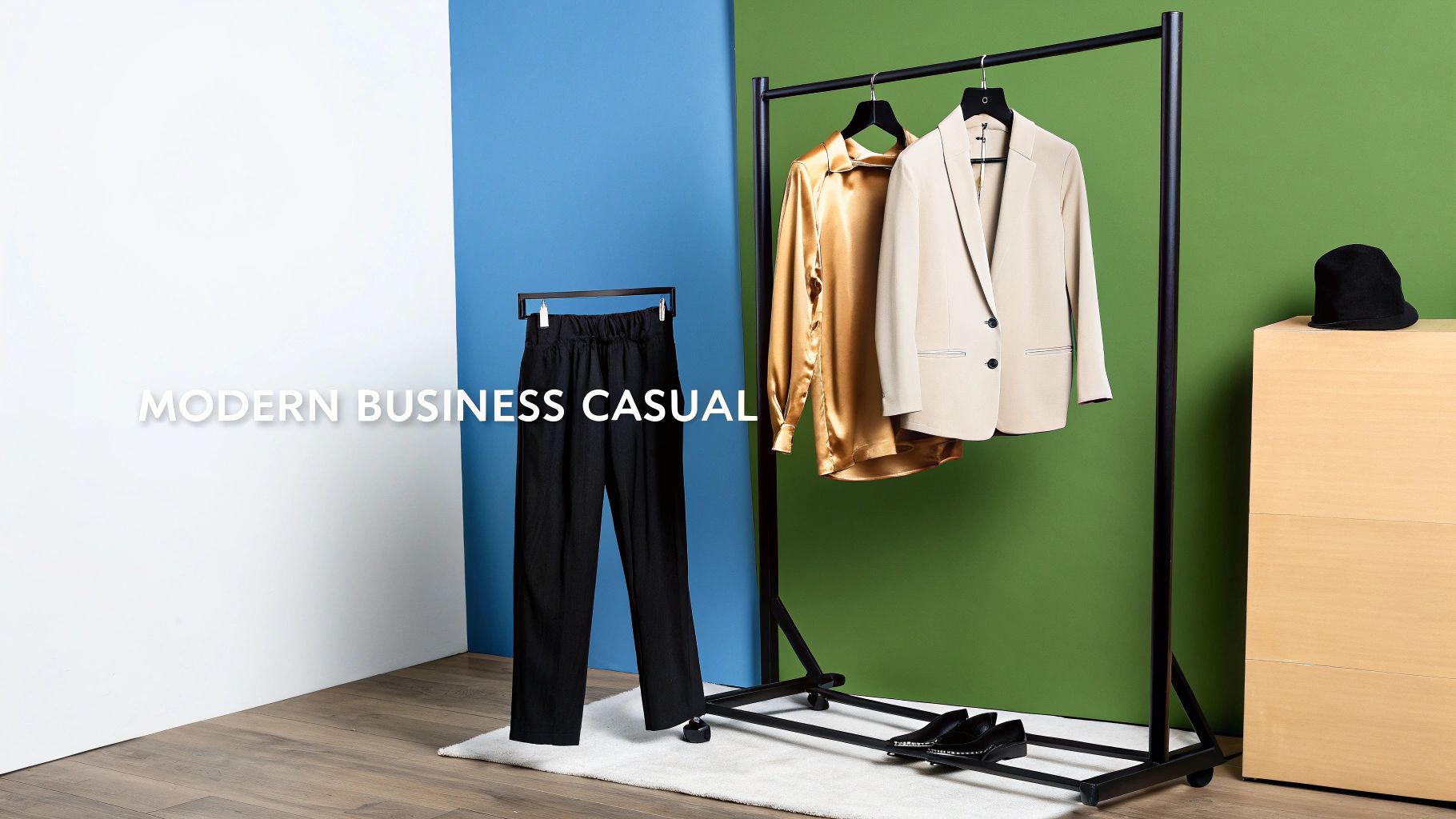
So, what exactly is business casual today? The term itself can feel like a riddle, leaving most of us staring into our closets completely stumped. It occupies that tricky space between strictly corporate and totally casual, but believe me, it's easier to master than you think.
The whole idea is to look professional and capable without seeming stuffy or overly formal. We've moved away from the rigid dress codes of the past toward a more flexible style that actually lets your personality shine through. This modern take is all about quality fabrics, clean lines, and smart layering to project confidence.
The New Office Standard
Business casual isn't just for "dress-down Fridays" anymore; for many of us, it's the daily reality. More and more workplaces are embracing this style to create a more relaxed and creative atmosphere, reflecting a bigger cultural shift where your skills are valued more than your ability to conform to an old-school dress code.
The numbers don't lie. A 2023 Gallup survey found that 51% of women now wear business casual to their jobs regularly. Compare that to the tiny 3% who still wear traditional business professional attire, and you can see how much the modern office has changed.
This just goes to show that knowing how to nail business casual is a crucial skill for getting ahead in today's professional world.
The secret to great business casual style is all about balance. If you're wearing something more relaxed on the bottom, like dark-wash jeans, pair them with a structured blazer up top. If you go for a simple knit sweater, elevate it with tailored slacks and polished leather shoes.
Navigating the Gray Area
One of the biggest headaches with business casual is that it can mean wildly different things from one company to the next. A tech startup’s idea of it might include cool sneakers and dark denim, while a corporate finance office might expect something closer to smart casual. If you're ever caught in the middle, our guide on the smart casual dress code can help clear things up.
To cut through the confusion, it helps to think of office wear as a spectrum. On one end, you have business professional (think full suits and formal heels), and on the other, you have streetwear (hoodies, ripped jeans, graphic tees). Business casual sits right in that happy medium.
The Business Casual Spectrum At a Glance
To give you an immediate visual, here’s a quick reference table breaking down where different pieces fall. Think of it as your cheat sheet for getting dressed in the morning.
Too Formal (Business Professional) | Just Right (Business Casual) | Too Casual (Streetwear) |
|---|---|---|
Full matching suit | Tailored blazer or cardigan | T-shirts with large logos or graphics |
Sheer stockings or pantyhose | Blouses, silk shells, fine-knit sweaters | Hoodies and athletic sweatshirts |
Formal skirt or pant suit | Chinos, tailored trousers, dark-wash jeans | Ripped or light-wash denim |
Stilettos or formal pumps | Loafers, block heels, clean fashion sneakers | Flip-flops, running shoes, sandals |
Structured briefcase | Quality leather tote or satchel | Backpacks or canvas tote bags |
Use this table as your starting point. The real key is to pay attention to your specific workplace and adjust accordingly. And remember the golden rule: when in doubt, it’s always better to be slightly overdressed than underdressed. It shows you respect your environment and helps you project a capable, professional image from the moment you walk through the door.
Building Your Foundational Work Wardrobe
Let's be honest, creating a stylish business casual wardrobe isn't about stuffing your closet full of clothes. It’s about having the right pieces—the ones that make you feel confident and polished without a second thought. Building a foundational wardrobe means investing in a core set of versatile, high-quality items that you can mix and match endlessly.
Think of these items as the building blocks for countless outfits. Once you have this solid base, you can start layering in fun seasonal colors, interesting textures, and pieces that show off your personality.
And it seems everyone is catching on. The global women’s apparel market was valued at a staggering USD 1.05 trillion in 2023 and is expected to hit USD 1.32 trillion by 2030. That growth is all about our collective desire for comfortable, chic clothes that work for the office and for life after 5 PM.
The Essential Tops and Sweaters
Your tops are truly the workhorses of your business casual attire. The goal is to have a variety of styles in fabrics that look and feel amazing. Just a few well-chosen blouses and sweaters can create a surprising number of different looks.
Silk-Blend Blouses: A simple, fluid blouse instantly makes a pair of trousers or a skirt look more luxe. Start with neutrals like ivory, black, or navy, then maybe add one or two in a soft color like blush or powder blue.
Fine-Knit Sweaters: You can't go wrong with crewnecks and V-necks in merino wool or cashmere. They’re perfect for layering but look just as sharp on their own. A sweater that fits just right is the definition of quiet confidence.
Structured Shells: These sleeveless tops are essential for wearing under blazers and cardigans. Look for styles in materials like crepe that provide coverage without adding any bulk.
Perfecting Your Bottoms: Trousers, Skirts, and Denim
The right pair of pants or a perfectly cut skirt can make you feel powerful and ready for anything. Fit is absolutely everything here, so don't hesitate to take your pieces to a tailor. A few small adjustments can make a world of difference.
For trousers, stick to classic cuts like straight-leg, wide-leg, or a slim-fit ankle pant. You absolutely need pairs in black, charcoal, and navy. A great pair of dark-wash jeans can also be a staple if your office culture is more relaxed. Just make sure they are clean and free of any rips or distressing. For more tips, check out our guide on finding the most befitting jeans for ladies to rock on.
As for skirts, a classic pencil skirt or an A-line style that hits right at or below the knee is a universally flattering and professional choice.
The Power of the Third Piece
The "third piece" is the secret weapon that pulls an entire look together. It’s that final layer—a blazer, a cardigan, or a vest—that adds structure and polish. It shows you didn't just throw on clothes; you created an outfit.
A well-fitted blazer is probably the most transformative item you can own. It can make a simple top and trousers look like a power suit, or instantly dress up dark jeans for a more creative office setting.
Here are the key third pieces you should consider adding to your wardrobe:
The Classic Blazer: Start with one in black or navy. A single-breasted style is incredibly versatile. Look for quality construction in the shoulders and a fabric that doesn’t wrinkle easily.
The Longline Cardigan: A duster-style or long cardigan gives you a softer, more approachable look than a blazer. It’s perfect for adding a touch of warmth and effortless elegance.
The Structured Vest: A tailored vest is a chic, modern option that adds a layer of sophistication without the full formality of a blazer.
Investing in these foundational pieces is a smart move for your professional image. With this core wardrobe in place, getting dressed in the morning becomes a fun, creative exercise instead of a daily struggle.
Creating Outfits for Any Work Scenario
Having a closet full of beautiful, foundational pieces is one thing. Actually turning them into stylish, situation-appropriate outfits is where the real magic happens. This is where we go from a simple list of clothes to creating reliable "outfit recipes" you can turn to on any given morning, taking the guesswork out of getting dressed.
The goal is to feel confident and totally prepared, no matter what your day holds.
Mastering business casual isn't just about the items themselves, but understanding the context. A breezy linen trouser and shell top that feels perfect for a humid July day just won't cut it in the dead of winter. Likewise, the outfit that impresses a client in a buttoned-up corporate setting is worlds away from what you’d wear on a casual Friday at a tech startup.
Adapting Your Look for the Seasons
Your core wardrobe should be versatile enough to work year-round with just a few smart swaps. You don't need a whole new wardrobe every season; it’s more about adjusting fabrics, layers, and color palettes to stay comfortable and current.
Spring and Summer: This is the time for breathable fabrics. Think cotton, linen, and silk blends. A great go-to is a pair of wide-leg trousers paired with a sleeveless shell top, or maybe a knee-length A-line skirt with a simple, high-quality t-shirt. Always keep a light cardigan handy for that aggressive office air conditioning.
Fall and Winter: Rich textures and strategic layering are your best friends here. Swap your cotton trousers for wool or corduroy versions. A fine-knit merino wool or cashmere sweater becomes your go-to top, which you can easily layer under a structured blazer for extra warmth and polish.
A great tip is to think in terms of a "base outfit" and then add or subtract seasonal layers. For instance, a silk blouse and tailored trousers are your year-round base. In summer, you wear them as is. In winter, you add a wool blazer and switch your loafers for ankle boots.
This quick infographic offers a simple way to visualize building your outfits from the ground up, starting with your core pieces.
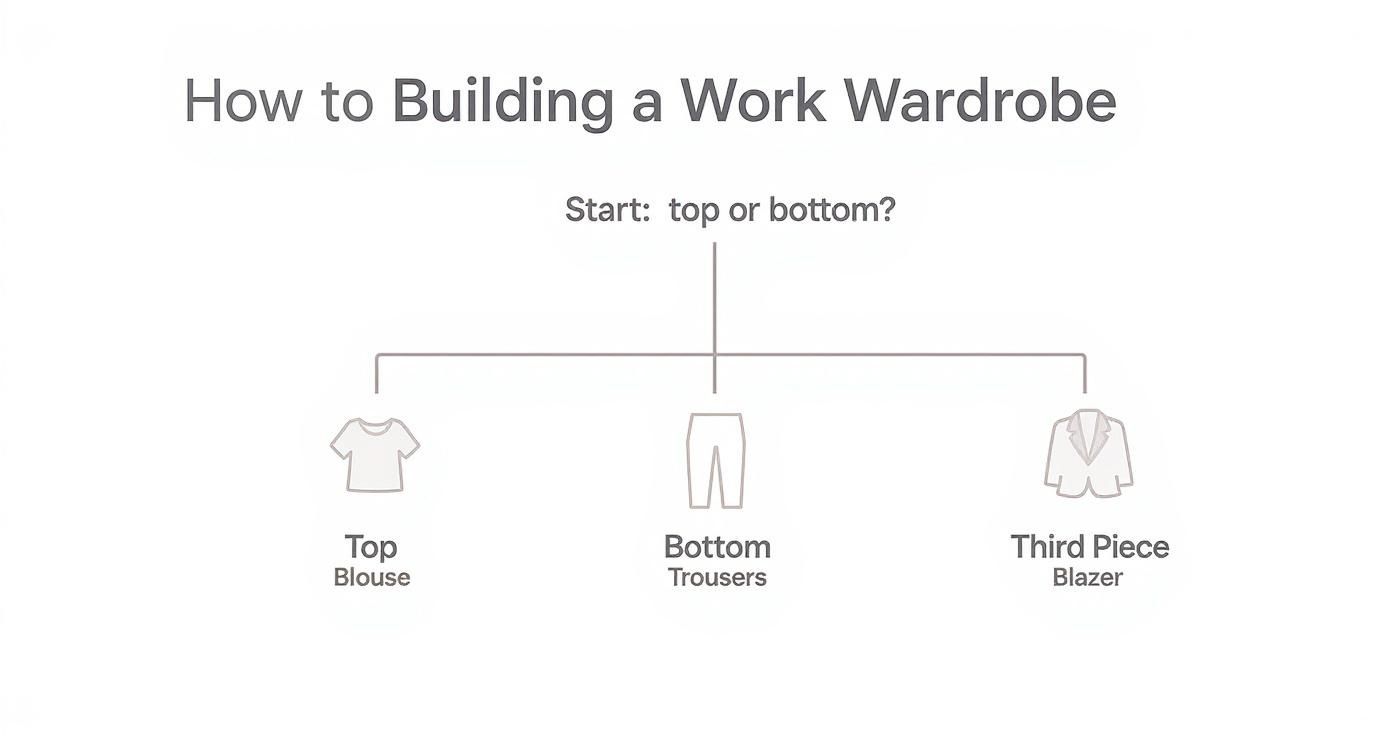
As you can see, starting with a versatile piece like neutral trousers or a classic blouse gives you a strong foundation. From there, you can build upon it with a complementary second or third piece to complete the look.
Navigating Different Office Cultures
Honestly, understanding your specific workplace environment is the most critical part of nailing business casual. What flies in a creative agency might get you some serious side-eye in a law firm. The best way to figure it out? Observe what your senior colleagues and managers wear—it’s often the best indicator of the unwritten rules.
The Corporate or Conservative Office In these settings, "business casual" definitely leans more towards the "business" side of things.
Go-To Outfit: A pair of tailored wool trousers, a silk shell, and a sharp, well-fitted blazer. Finish the look with classic leather loafers or low block heels.
What to Emphasize: Structure, high-quality fabrics, and a neutral color palette are your keys to success. Let your personality shine through in subtle ways, like with a beautiful watch or a quality leather tote.
The Creative or Tech Startup Office Here, you have a lot more freedom to express your personal style. Comfort and individuality are often valued, but you still need to look polished and put-together.
Go-To Outfit: Think dark-wash, straight-leg jeans (no rips or fading!), a stylish knit sweater, and clean, minimalist fashion sneakers or ankle boots. You could also rock a midi dress with a denim jacket.
What to Emphasize: This is where you can play with color, subtle patterns, and more relaxed silhouettes. The key is intentionality—it should look like a curated outfit, not like you just rolled out of bed.
Business casual dress codes for women have come a long way, moving from rigid rules toward more personalization. Interestingly, upcoming trends show a return of darker suits, but they're being styled in a more relaxed way—think colorful scarves or bold sweaters to inject some personality. You can find more insights on these evolving workwear trends to stay ahead of the curve. If you're curious about what's new, learn more about trending work dresses at Accio.
Using Proportions to Flatter Your Shape
Beyond just what you wear, how you wear it makes all the difference in the world. Playing with proportions and silhouettes can highlight your best features and create a balanced, flattering look. It’s a simple trick that makes any outfit look more thoughtful and intentional.
Here are a few principles I always rely on:
Balance Volume: If you're wearing something wide or voluminous on the bottom, like wide-leg trousers, pair it with a more fitted top. This creates a defined shape and keeps you from looking like you're swimming in fabric.
Define Your Waist: Tucking in your shirt—even just a partial "French tuck"—is one of the easiest ways to add polish. It defines your waistline and instantly makes an outfit feel more structured and complete.
Mind Your Hemlines: For trousers, the hem should either "break" slightly over the top of your shoe or sit just above the ankle. For skirts, a length that hits at or just below the knee is almost universally flattering and professional.
By keeping these principles in mind, you can adapt any outfit recipe to suit your body type and personal style. You'll walk into any work scenario feeling capable, confident, and completely yourself.
Choosing Shoes And Accessories That Elevate Your Look
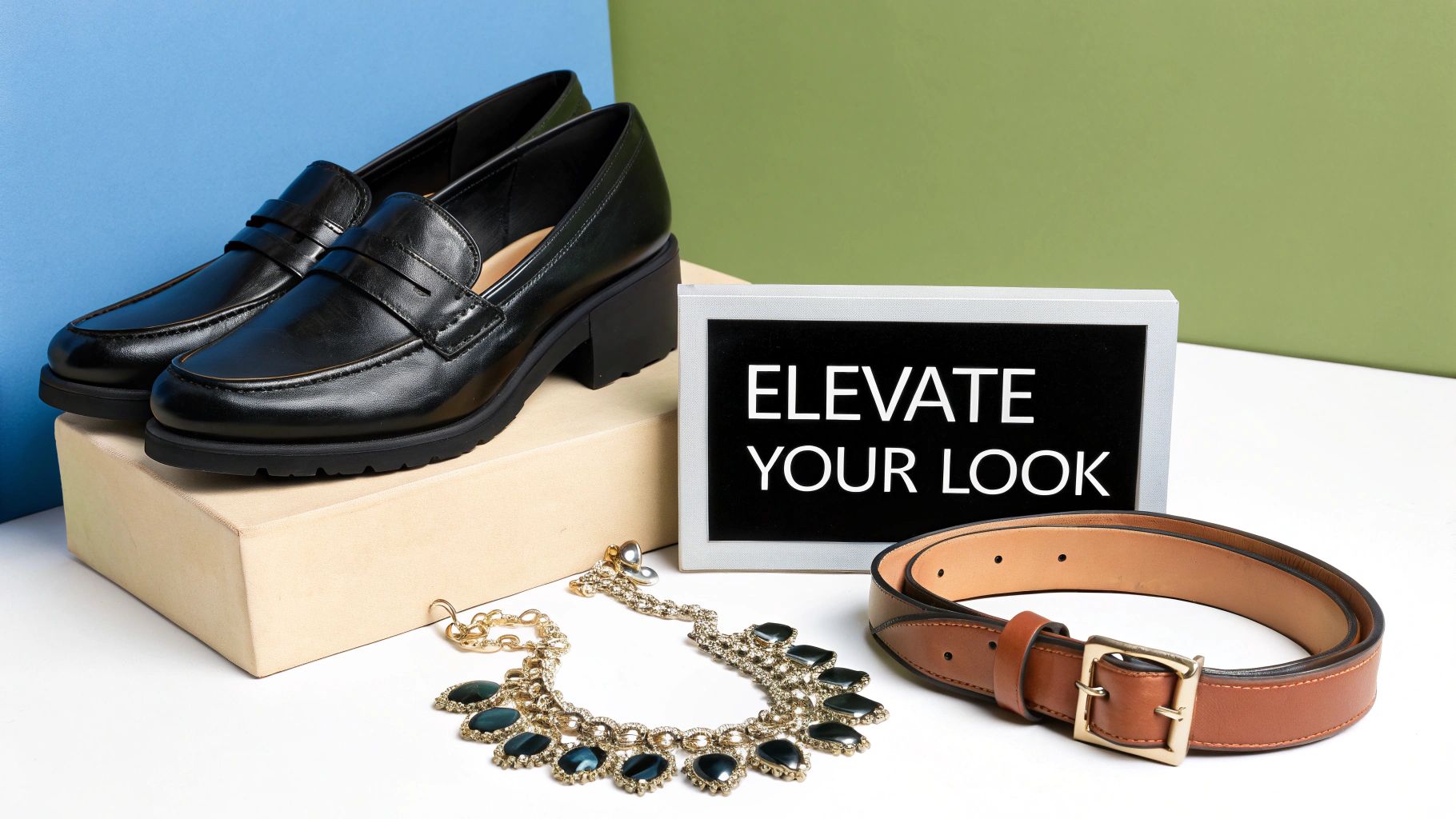
The secret ingredients that take an outfit from just "good enough" to something special? It's all in the shoes and accessories. These are the final touches where your personality gets to shine through, adding a layer of polish that shows your look was put together with care. Think of them as the punctuation on your professional statement.
It’s easy to get caught up in finding the right tops and trousers, but a thoughtfully chosen handbag or the perfect pair of shoes can completely transform even the simplest outfit.
Finding Your Footing With Business Casual Shoes
Your shoes are the foundation of your entire outfit, both literally and figuratively. They need to be comfortable enough to carry you through the day but still look sharp and professional. The goal is to find versatile styles that work just as well with tailored trousers as they do with skirts and dresses.
Here are a few essential styles that belong in any solid business casual wardrobe:
Classic Loafers: These are, without a doubt, the MVP of business casual shoes. A quality leather loafer is comfortable, timeless, and effortlessly chic. They pair beautifully with everything from trousers to midi skirts. To see just how essential they are, you can explore the timeless elegance of genuine leather loafers and their role in a stylish wardrobe.
Elegant Block Heels: Want a bit of height without the pain of stilettos? A low block heel is your best friend. They offer stability and a polished look, making them perfect for days with client meetings or when you just want to feel a little more put-together.
Chic Ankle Boots: As the weather cools down, a sleek ankle boot is a must-have. Look for styles with an almond or pointed toe and a low heel. They're the perfect partner for cropped trousers or worn with tights under a skirt.
Polished Flats: You can never go wrong with a simple ballet flat or a pointed-toe flat. In a neutral color like black or tan, they are a comfortable and sophisticated option that will always be in style.
Pro Tip: Keep your shoes looking their best. Scuffed heels or worn-out soles can instantly bring down an otherwise polished outfit. A quick wipe-down after wearing and regular trips to the cobbler can make a world of difference.
Selecting Accessories That Add Polish, Not Distraction
Accessories are where you can really let your personality show, but in a professional setting, the key is to be subtle and intentional. The right piece adds a touch of elegance; the wrong one can just be a distraction.
Your goal is to choose accessories that complement your outfit, not compete with it.
Jewelry And Timepieces
When it comes to jewelry, less is often more. You want to add a bit of sparkle and refinement without being overly flashy.
Earrings: Simple stud earrings or small, delicate hoops are always a safe and elegant choice.
Necklaces: A delicate pendant necklace or a simple chain adds a polished feel to a blouse or knit top. A single statement necklace can work beautifully with a simple crewneck sweater, but stay away from anything too large or noisy.
Watches: A classic wristwatch is both functional and a timeless accessory. It instantly adds a touch of sophistication to any look.
Bags And Belts
A functional, stylish bag is a core part of your work uniform. It has to be practical enough to hold all your essentials while still looking professional.
Accessory Type | What to Look For | What to Avoid |
|---|---|---|
Work Bags | Structured totes or satchels in quality leather or vegan leather. Neutrals like black, tan, or navy are the most versatile. | Slouchy bags, backpacks, or canvas totes that feel too casual for the office. |
Belts | Slim leather belts in black or brown to cinch your waist over dresses, skirts, or high-waisted trousers. | Wide, flashy, or heavily embellished belts that can be distracting. |
Ultimately, choosing the right shoes and accessories is all about curating a collection of timeless, high-quality pieces you love. Investing in these details ensures you’ll always have the perfect finishing touches to create a look that is polished, professional, and completely you.
Common Business Casual Mistakes to Avoid
Knowing how to pull off business casual involves more than just a great shopping list; it's also about sidestepping those subtle mistakes that can kill an otherwise polished vibe. Believe me, nailing this dress code is a game of nuances. Avoiding the common pitfalls is what ensures you walk into any room projecting confidence.
Think of this as your final checklist before you head out the door. We're going to move beyond the obvious "don't wear ripped jeans" advice and get into the little details that separate a good outfit from a truly great one.
Ignoring the Importance of Fit
This is, without a doubt, the most common mistake I see. You could be wearing the most expensive blazer, but if it’s too boxy or the sleeves are too long, the whole look just falls flat. Clothes that are too tight can come across as unprofessional, while pieces that are too baggy just look sloppy.
The solution is simple but honestly, it's transformative: embrace tailoring. A few small tweaks to a pair of trousers or the shoulders of a blazer can make an off-the-rack item look like it was custom-made for you. It’s a small investment that pays off big time in how you feel.
Your goal is for your clothes to skim your body, not cling to it or hide it. When your clothes fit well, you look put-together without even trying, which lets your skills and personality shine through.
Wearing Tired or Wrinkled Fabrics
Nothing screams "I got dressed in a hurry" quite like wrinkled clothing. A creased blouse or rumpled trousers can instantly cheapen an outfit, no matter how stylish the pieces are. In that same vein, fabrics that are faded, pilled, or stretched out from overuse need to be retired from your work rotation.
The Quick Fix: Always steam or iron your clothes the night before. It takes five minutes but makes a world of difference.
The Smart Investment: When you're shopping, keep an eye out for fabrics with a bit of stretch or those labeled "wrinkle-resistant." Materials like crepe, merino wool, and high-quality Tencel tend to hold their shape and stay smooth all day.
Overlooking Sheer or Revealing Items
Office lighting can be brutal. A top that looked perfectly fine in your bedroom might suddenly become see-through under those bright fluorescent lights. Plunging necklines or super short skirts are also best saved for after-hours.
A good rule of thumb is to err on the side of modesty. If you have to second-guess whether something is appropriate, it probably isn't. Always check your outfit in bright, direct light before you leave. For blouses that are a little on the sheer side, a simple nude-colored camisole underneath gives you coverage while staying invisible.
Choosing Overly Casual Footwear
Your shoe choice can make or break a business casual outfit. Comfort is definitely key, but wearing scuffed-up running shoes, flip-flops, or worn-out sneakers will instantly drag down your entire look. Even on a casual Friday, your footwear should still feel intentional and polished.
Instead of: Your everyday gym sneakers. Try: A pair of clean, minimalist leather fashion sneakers.
Instead of: Flimsy sandals or flip-flops. Try: A stylish pair of leather loafers or elegant pointed-toe flats.
Accessorizing Too Loudly
Accessories should complement your outfit, not scream over it. While a statement necklace or a colorful scarf can add some personality, you'll want to steer clear of anything that's too noisy, flashy, or distracting. Think jangling bracelets that make noise every time you move or massive earrings that command more attention than you do.
The goal here is to add a touch of polish. A classic watch, delicate jewelry, and a structured leather bag are always safe—and stylish—bets. Let your accessories be the sophisticated finishing touch, not the main event.
Your Questions on Business Casual Answered
Let's be honest, figuring out business casual can feel like a bit of a moving target. Just when you think you've got it down, a new situation comes up and suddenly you're second-guessing everything. So, let's clear the air and tackle some of the most common questions that pop up when dressing for a modern workplace.
Are Jeans Okay for Business Casual?
This is the big one, and the answer is a firm maybe. It really, truly comes down to your specific office culture. If you're in a more traditional or corporate environment, it's always safer to stick with tailored trousers. No question about it.
But in so many modern workplaces now, especially in creative or tech fields, a fantastic pair of jeans is completely fine. If you decide to wear denim, there are a few non-negotiables to keep it looking professional:
Go for a Dark Wash: Dark indigo or black jeans instantly read as more polished and put-together than lighter washes.
Fit is Everything: Choose a clean, tailored cut. Think straight-leg, a subtle bootcut, or a sleek slim fit. Anything overly tight, baggy, or trendy is out.
Absolutely No Distressing: This is key. Your jeans need to be a solid wash, with no rips, holes, frayed hems, or heavy fading. The goal is sharp, not worn-in.
Do I Always Need to Wear a Blazer?
While a blazer is a total power piece for elevating an outfit, it's definitely not required for every single business casual look. A blazer is your best friend for a big client meeting or a presentation where you want that extra layer of authority.
On a regular day, though, a high-quality cardigan, a structured knit sweater, or even a chic tailored vest can work just as well as that "third piece." The whole point of this layering piece is to add polish and make your outfit look complete. A blazer is just one of many great ways to do that.
Think of it this way: your outfit should always look intentional. Whether you top it off with a blazer, a beautiful cardigan, or even a great scarf, adding that final element shows you put thought into your appearance.
What About Sleeveless Tops or Dresses?
Sleeveless styles can feel like a grey area, but they aren't automatically forbidden. A well-cut shell top or a dress with wider, cap-style sleeves is usually perfectly appropriate for most offices. These styles still provide good shoulder coverage and maintain a professional silhouette.
Where you run into trouble is with spaghetti straps or thin-strapped tank tops—those are almost always too casual for work. If you have a sleeveless dress you absolutely love, the easy fix is to just layer a blazer or cardigan over it while you're in the office. It’s a simple solution that gives you versatility and keeps you well within the dress code.
Can I Wear Sneakers?
Like jeans, this one is 100% dependent on your workplace. In a more conservative setting, you'll want to stick to loafers, elegant flats, or low heels. But in many relaxed and creative environments, a clean, stylish pair of sneakers is a fantastic option.
Now, if you go the sneaker route, you have to be strategic. We are not talking about the shoes you wear to the gym.
Choose Elevated Materials: Look for styles in leather or suede. They just look more luxe and purposeful.
Keep Them Spotless: Nothing ruins the effect faster than scuffs and dirt. Make sure your sneakers are pristine every time you wear them.
Stick to Minimalist Styles: Simple, low-profile sneakers in neutral colors like crisp white, black, or tan are the most versatile and professional-looking choices.
At STYLISH FITTS, we believe building a work wardrobe you feel confident in should be simple. Explore our collections of versatile blouses, tailored trousers, and elegant accessories designed to make business casual dressing completely effortless. Find your perfect fit and elevate your professional style by visiting us at https://www.stylishfitts.com.