Discover what is cocktail attire for men: a quick guide
- Владимир Иваныч
- Nov 14, 2025
- 16 min read

So, you've got an invitation that calls for "cocktail attire," and your mind immediately starts racing. What does that even mean? It’s one of those dress codes that sounds simple but can leave a lot of guys scratching their heads.
Essentially, cocktail attire for men is that perfect sweet spot between formal and casual. You’re looking at a suit and tie or a sharp blazer and dress trousers. It's a step up from your daily office wear but not as rigid and buttoned-up as black-tie. Think of it as your chance to look sharp, sophisticated, and ready for a great time at a wedding, an upscale party, or a company event.
Cracking the Code of Cocktail Attire
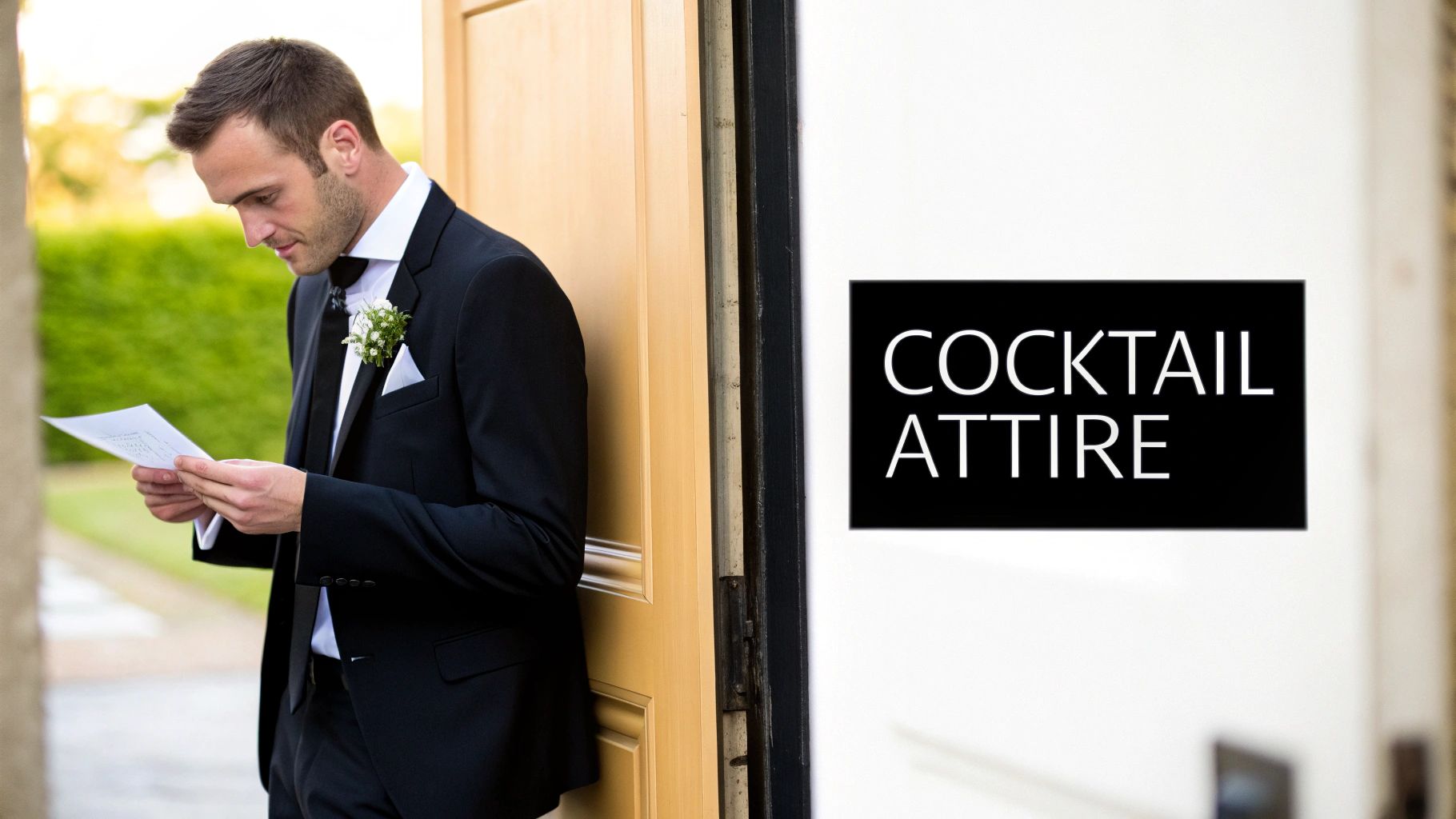
Let's be honest, seeing "cocktail attire" on an invitation can feel like you've been handed a riddle. It’s a common point of confusion because it lives in a unique space—it's way more polished than what you’d wear to the pub, but you can leave the tuxedo in the closet. The main goal here is to look elegant and celebratory without being stuffy or, even worse, looking like you didn't try.
The whole point of this dress code is to respect the occasion. It’s meant for social gatherings that are a bit special, and showing up looking put-together is a nod to your hosts that you appreciate the effort they've put in. It's about looking like you made a conscious choice to be there and to look your best.
The Sweet Spot of Style
The easiest way to get your head around it is to think of cocktail attire as a fashionable upgrade from smart casual. While smart casual is about looking sharp, cocktail attire almost always demands a jacket and usually a tie, which kicks it up a notch. The great thing is, unlike the strict rules of black-tie, this dress code gives you room to play with colors, textures, and accessories.
And this isn't some new trend, either. The idea of blending formal and casual styles popped up during the cocktail party craze of the 1920s. By the middle of the 20th century, it was the go-to look for any event that needed a bit of polish without the full-blown formality of a tuxedo.
For a quick reference, here's a simple breakdown of what to focus on.
Cocktail Attire At a Glance
Component | Key Guideline |
|---|---|
The Jacket | A dark suit or a stylish blazer is your starting point. |
Trousers | Should be well-fitted and complement your jacket. |
The Shirt | A crisp, clean dress shirt is a must—no exceptions. |
Footwear | Polished leather dress shoes, like Oxfords or Loafers. |
Accessories | A tie and pocket square elevate the look from good to great. |
Getting these core elements right is the foundation for a killer cocktail outfit.
Core Principles of Cocktail Attire
At the end of the day, this dress code is built on a few key pillars. If you can nail these fundamentals, you’ll walk into any event looking like you belong.
Foundation First: Your whole outfit is built around either a dark suit (navy or charcoal are foolproof) or a slick combination of a blazer and well-fitted trousers.
The Shirt Matters: A crisp dress shirt is non-negotiable. White is timeless and always works, but light blue or a subtle pattern can inject some personality.
Polished Footwear: Your shoes can make or break the outfit. Stick with polished leather dress shoes—Oxfords, Derbies, or even a smart loafer are your best bets.
Attention to Detail: This is where you can shine. Accessories like a tie, a pocket square, and a classic watch are what separate the men from the boys.
Master these basics, and you'll have the confidence to own the room at any semi-formal event on your calendar.
Building Your Look The Suit or Separates
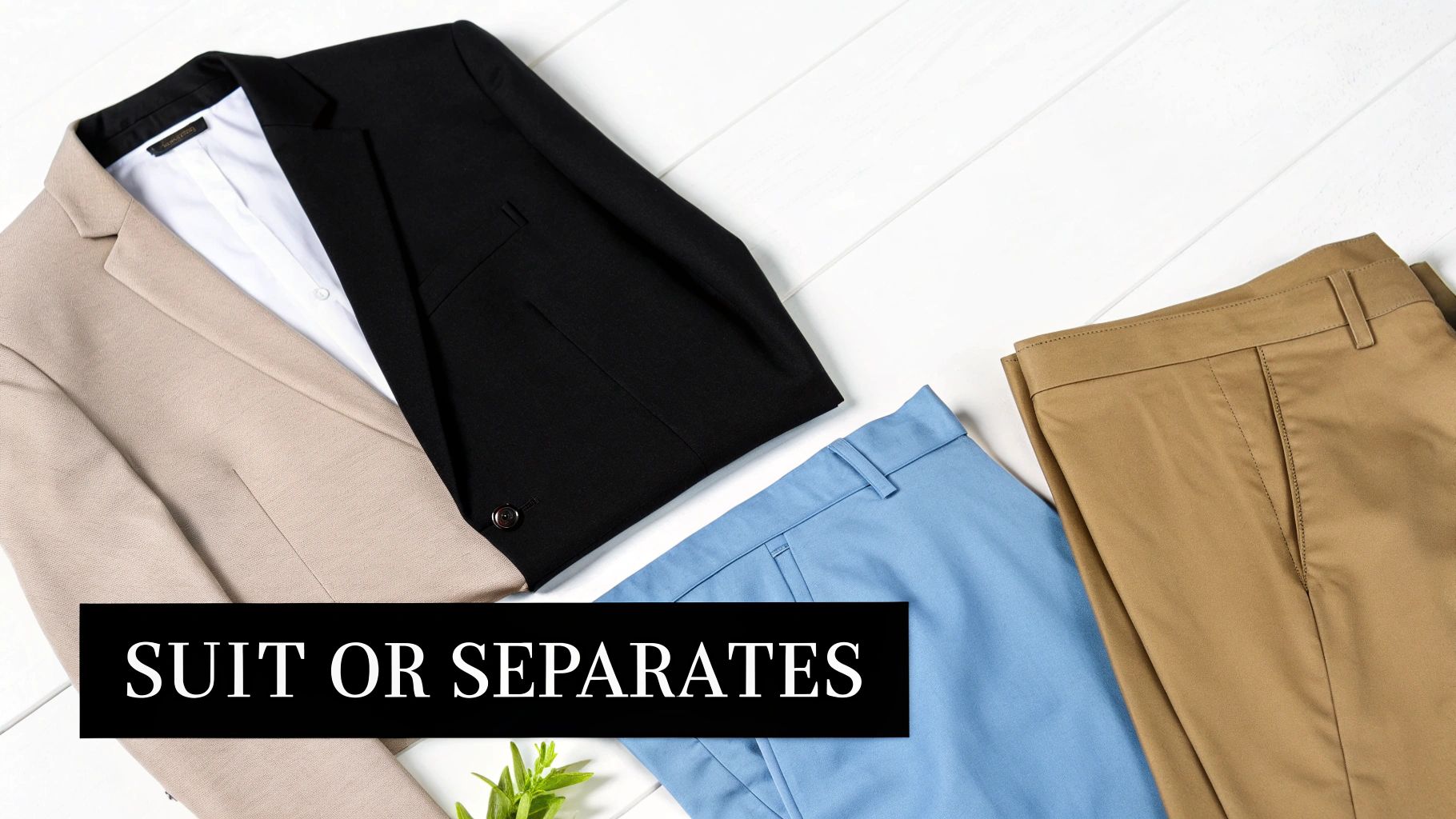
The foundation of any solid cocktail outfit is what you build it on: the jacket and trousers. This is the core of your look, the main event. You’ve really got two main paths you can take here. The first is the classic, unified statement of a suit. The second is the more creative and personality-driven combo of separates.
Honestly, both options are completely correct and can look incredibly sharp. Your choice really boils down to the specific event, your own personal style, and what you’ve got hanging in your closet. Let’s get into how to nail both approaches.
The Classic Suit The Ultimate Safe Bet
When in doubt, a dark suit is your absolute best friend. It’s the gold standard for men’s cocktail attire for a good reason—it’s simple, it's elegant, and it’s almost impossible to mess up.
The trick is to stick with classic, versatile colors that just ooze confidence.
Charcoal Grey: This color is a total workhorse. It's formal enough for pretty much any evening event but isn't as harsh as solid black, which makes it super adaptable.
Navy Blue: A navy suit always gives off a modern and approachable vibe. Plus, it works well with a huge range of shirt and tie colors, so you'll have plenty of options to play with.
While a black suit has its moments, it can sometimes feel a bit too serious or funereal for a lively cocktail party. For most events, navy and charcoal are the clear winners. They give you the perfect canvas to add your own personality through your shirt, tie, and accessories.
Blazer and Trousers The Versatile Alternative
If a full suit feels a little too much like your work uniform or you just want to show off a bit more of your style, then pairing a blazer with trousers is a fantastic choice. This approach, often called "separates," lets you get more creative with colors and textures while still looking perfectly put-together.
The real secret to making separates work is contrast. You never want to look like you grabbed your suit jacket and accidentally put on the wrong pants. The pairing has to look intentional.
A well-chosen separates combination shows confidence and a real understanding of style. It says, "I know what a suit is, but I chose this instead." The goal is a look that is harmonious, not just thrown together.
Here are a few classic pairings that always work:
A crisp navy blazer with medium-grey wool trousers.
For winter events, a tweed or flannel sport coat with dark charcoal pants.
A lighter grey jacket with navy trousers is a great look for a daytime thing.
This route gives you more freedom, for sure, but it also takes a little more thought to make sure everything works together smoothly.
Fabric and Fit The Non-Negotiables
Whether you go for a suit or separates, two things will make or break your entire look: the fabric and the fit. The material of your clothes determines how they hang, how they feel, and how they hold up. Wool is always a classic choice because it’s durable and breathes well, but don’t sleep on blends that can offer extra comfort and wrinkle resistance.
But above all else, the single most important element is the fit. An expensive suit that fits poorly will always look worse than an affordable one that’s been tailored to your body. You're aiming for a modern silhouette: slim, but not skinny. The jacket should hug your shoulders without any pulling, and your trousers should fall in a clean line without a bunch of fabric puddling around your ankles.
Every well-dressed man knows that a great tailor is a secret weapon. Spending a little extra on alterations can make an off-the-rack outfit look like it was custom-made just for you. Trust me, it's worth it.
Choosing the Right Shirt and Tie
If your suit or blazer is the frame, your shirt and tie are the art inside it. This is where you really start to build the personality of your outfit. A bad shirt can drag down an amazing suit, so this is one detail you absolutely have to nail.
First things first: your dress shirt needs to be crisp and perfectly pressed. While you have options, some classics are classics for a good reason. White is the king of dress shirts—it’s clean, sharp, and provides the perfect backdrop for any suit or tie color you can imagine. It's a no-fail choice that always works.
But you're not just limited to white. A light blue shirt is another incredibly versatile option that looks fantastic with navy and charcoal suits. If you want to add a little more character, a shirt with a very subtle pattern, like a fine pinstripe or a tiny micro-check, can bring in some texture without being loud.
Selecting the Perfect Dress Shirt
The right shirt is about more than just the color; the fit and fabric are just as important. Your shirt should fit smoothly across your chest and shoulders without any pulling, and you should be able to slip one finger between the collar and your neck when it's buttoned. For a deeper dive into getting the fit just right, check out our guide on suitable shirts that are tailored to every man’s unique body shape.
Keep these key points in mind when you're choosing a shirt:
Fabric is Key: Always look for high-quality cotton. Fabrics like broadcloth or poplin give you that smooth, crisp finish that’s perfect for dressier events.
Collar Style Matters: A classic point or semi-spread collar is your most reliable bet. They work with just about any tie knot and suit lapel.
Cuffs Count: Standard button cuffs (also called barrel cuffs) are perfectly fine. But if you want to dial up the formality, French cuffs (the ones that need cufflinks) add a serious touch of class.
The Art of the Tie
The tie is often where you can really let your personality shine. The trick is to pick one that works with your suit and shirt, not against them. You want harmony, not a competition.
A great tie doesn't just match your outfit; it enhances it. It should create a harmonious visual link between your suit and shirt, drawing the eye upward and framing your face.
For cocktail attire, a silk tie is the go-to choice. It has a subtle sheen that just oozes elegance. Don't be afraid to mix it up, though. In colder weather, a wool or knit tie can add some amazing texture to your look. As for the knot, keep it simple. The classic Four-in-Hand is easy to learn and looks effortlessly cool.
To Tie or Not to Tie
Lately, the "no-tie" look has become more popular, but you have to be careful with this one. Can you pull it off with cocktail attire? Sometimes. It works best at more modern, creative events, or maybe a relaxed daytime party.
If you do decide to skip the tie, the rest of your outfit has to be absolutely on point to make up for it.
Impeccable Fit: Your suit tailoring needs to be flawless. No exceptions.
Pristine Shirt: The shirt must be perfectly ironed, and the collar needs to be stiff enough to stand up on its own without looking sloppy.
Elevated Details: A pocket square is no longer optional; it’s essential. It provides that pop of visual interest where the tie would have been.
For most traditional events like weddings or corporate functions, wearing a tie is the safer and more respectful move. When in doubt, it’s always better to show up slightly overdressed with a tie than to look underdressed without one.
Perfecting the Finishing Touches: Shoes and Accessories
Think of your footwear as the foundation. If it’s weak, the whole outfit comes crumbling down. For any cocktail event, polished leather dress shoes are an absolute must. They ground your outfit with that essential touch of formality and class.
Stepping Up Your Shoe Game
The right pair of dress shoes can subtly shift the entire vibe of your outfit. It’s always a safe bet to stick with the classics in dark, rich colors—think dark brown and black. You can’t go wrong.
Here are the key styles you need to know:
Oxfords: This is the quintessential dress shoe, easily identified by its closed lacing system. A sharp black or dark brown cap-toe Oxford is probably the most formal and polished choice you can make.
Derbies: A little less formal than Oxfords because of their open lacing, Derbies are a classic that offers a bit more versatility. They look just as good with a full suit as they do with a blazer and trousers.
Monk Straps: With a buckle instead of laces, Monk Straps bring a bit of European flair to the table. They're a confident choice for the guy who wants to stand out in a subtle, stylish way.
For more relaxed cocktail settings—like a daytime wedding or a summer party—a high-quality leather loafer can be a fantastic choice. Tassel or penny loafers in a deep brown or burgundy add a refined yet laid-back feel. To dive deeper into essential footwear, check out our guide on the various shoes every man needs to have for a complete overview.
Mastering Essential Accessories
Once your shoes are sorted, it’s time to dial in the other details. These pieces should complement your outfit, not scream for attention.
A quality leather belt is non-negotiable, and the rule here is simple: your belt should match your shoes. That means a brown leather belt with brown leather shoes, and a black belt with black ones. It’s a small detail that creates a clean, intentional look.
The pocket square is your chance to show some personality. It should never perfectly match your tie; think of them as cousins, not twins. They should complement each other.
A crisp white linen pocket square is a timeless choice that works with literally everything. If you want to add a pop of color, pick a secondary color from your tie or shirt and find a pocket square that features that shade. A simple TV fold (a clean, straight line across the pocket) is modern and sharp.
The Final Details
These last few items are what truly signal a well-thought-out outfit. A classic watch on your wrist adds a quiet touch of confidence and maturity. A simple, elegant timepiece with a leather strap or metal bracelet is far more appropriate here than a clunky sports watch.
Finally, think about the smaller metallic details. If your shirt has French cuffs, cufflinks are a must and another great way to show a bit of personality. A subtle tie bar can also be a sharp addition, keeping your tie perfectly in place. Just try to match your metals—a silver watch with a silver tie bar, for instance—to keep the whole look harmonious.
Adapting Your Outfit for Any Season or Event
One of the biggest mistakes you can make is thinking cocktail attire is some rigid, one-size-fits-all uniform. Honestly, it’s more of a flexible framework, and the truly well-dressed guys are the ones who know how to adapt it to the specific event.
Your first clue is always the invitation. Is it a summer wedding on a rooftop or a winter holiday party at a fancy hotel? The time of year and the formality of the place will guide your choices in color, fabric, and texture, making sure your outfit feels right and not like you just grabbed the first suit you saw.
Seasonal Adjustments for Cocktail Attire
Think of your wardrobe like a toolkit—you wouldn't use the same tools for every single job. Lighter fabrics and colors are your best friends when it’s warm out, while richer textures and deeper tones are perfect when the temperature drops.
Spring and Summer Events:When the weather heats up, the goal is to look sharp without actually overheating. This is where fabrics that can breathe come into play.
Lighter Fabrics: Go for suits or blazers in materials like linen blends, lightweight wool, or cotton. These fabrics let air flow and keep you way more comfortable.
Brighter Colors: This is the perfect time of year to rock lighter suit colors. A soft grey, light blue, or even a tasteful khaki suit can look incredibly stylish, especially for a daytime or outdoor event.
Example Outfit: For a summer wedding, try a light grey linen-blend suit with a crisp white dress shirt. Add a pastel silk tie and some brown leather loafers (socks are optional, depending on the vibe of the venue), and you're golden.
Autumn and Winter Events:Colder weather is an invitation to play with richer, more substantial textures that add warmth and a bit of visual interest to your outfit.
Heavier Fabrics: Look for suits and blazers in flannel, tweed, or a heavier wool. These materials just feel right for the season and give you that extra layer of warmth.
Deeper Colors: Dark, moody colors really shine in the winter. Think charcoal, deep navy, and even shades of burgundy or forest green for a sport coat—all excellent choices.
Example Outfit: Heading to a winter holiday party? A charcoal flannel suit paired with a light blue dress shirt, a textured wool tie in burgundy, and some classic black Oxford shoes creates a look that’s sophisticated and spot-on for the season.
Dressing for the Specific Occasion
Beyond just the season, the type of event you're attending will dictate the finer details of your look. A corporate networking event requires a different touch than a celebratory wedding, for sure.
The formal wear market is no joke—it was valued at USD 3.8 billion in 2023, with North America holding over 36% of the global revenue share. This is all driven by a strong culture of formal events, from business functions to big life celebrations, where knowing how to nail your cocktail attire is a must. You can dig into more data on this trend in the full formal wear market report.
This decision tree gives you a visual for putting the final touches on your look, from your shoes to your accessories.
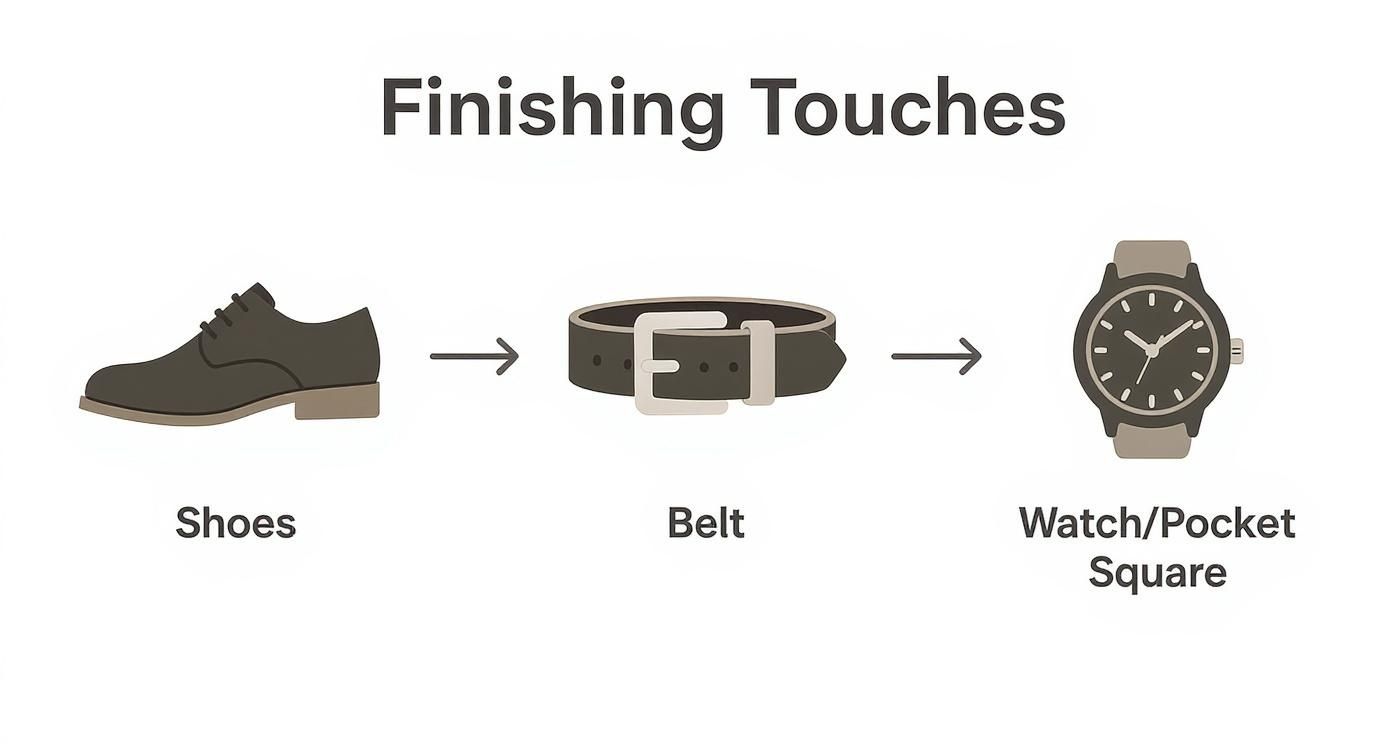
As you can see, there’s a clear, logical way to choose accessories so that every single element, from your shoes to your pocket square, works together.
Your outfit should always respect the host and the purpose of the gathering. A conservative choice for a corporate event shows professionalism, while a more festive look at a wedding shows you're there to celebrate.
Here are a couple of common scenarios and the exact outfit formulas to use:
The Corporate Networking Event: Here, professionalism is everything. Stick to a classic charcoal or navy suit, a white dress shirt, a conservative silk tie (maybe with a subtle pattern), and polished black dress shoes. This look sends a message of confidence and that you mean business.
The Celebratory Wedding: This is your chance to be a bit more expressive. A well-fitted navy blazer with crisp grey wool trousers is a fantastic choice. Pair it with a light blue shirt, a more vibrant tie or pocket square, and dark brown leather shoes to hit that perfect balance between formal and festive.
Common Cocktail Attire Mistakes to Avoid
Knowing the rules of cocktail attire is one thing, but spotting the pitfalls is what separates the guys who get it from the guys who don't. Getting this dress code right is all about sidestepping the common blunders that can instantly tank an otherwise solid effort. Nail it, and you’ll look confident, sharp, and perfectly in sync with the vibe of the event.
The most common mistake, without a doubt, is simply misjudging how formal you need to be. This can go one of two ways, and trust me, both are equally awkward. You don't want to be the guy in jeans when everyone else is suited up, but you also don't want to show up in a full tux while the room is full of blazers.
The Ultimate Style Killer: Poor Fit
Honestly, the biggest mistake you can possibly make is wearing something that just doesn't fit you right. It doesn’t matter if your suit is from a top designer; if it’s baggy, sloppy, or pulling in all the wrong places, the whole look is shot. A poor fit is the ultimate style killer because it just screams that you didn't pay attention to the details.
Think of it like this: a well-tailored suit is like a custom frame for a piece of art—it makes what’s inside look even better. A baggy suit? That's like a wrinkled, oversized frame that completely distracts from the art itself.
Your clothes should follow the natural lines of your body. A jacket that’s too wide in the shoulders or trousers that puddle around your ankles will instantly make you look unpolished, regardless of how much you spent.
How to Fix It:
Shoulder Fit: The seam on your jacket's shoulder should end exactly where your natural shoulder does. No exceptions.
Jacket Length: The jacket should be just long enough to cover your seat.
Trouser Break: Aim for a slight break or even no break at all. This means your trousers should just kiss the top of your shoes. A quick trip to a tailor is the best style investment you can make.
Underdressing and Overdressing
Another classic misstep is just missing the mark on formality. Showing up underdressed in things like denim, t-shirts, or sneakers shows a lack of respect for the occasion and the person who invited you. It basically signals that you didn’t think the event was important enough to try.
On the other hand, being overdressed in something like a black-tie tuxedo can make you and everyone else feel a bit uncomfortable. Cocktail attire is meant to be celebratory and sharp, but it's not strictly formal.
How to Fix It: When in doubt, a dark suit is your safest play. It’s almost impossible to be underdressed in a well-fitted navy or charcoal suit. This classic choice hits that perfect sweet spot of sophistication without wandering into black-tie territory.
Other Common Pitfalls
Beyond those major mistakes, a few smaller details can also trip you up. Loud, clashing patterns or colors can be distracting and just look like you're trying too hard. In the same way, forgetting about personal grooming—like an unkempt beard or messy hair—can bring down even the sharpest outfit. Your whole presentation matters, from head to toe.
Your Cocktail Attire Questions Answered
Even when you think you've got the rules down, certain situations can make you second-guess your outfit. Nailing the finer points of cocktail attire is what separates the guys who look good from the guys who look great. This final section tackles the most common questions that pop up, giving you clear answers so you can walk into any event with total confidence.
Think of this as your style tie-breaker, making sure you always make the right call when it comes to those tricky details.
Can I Wear a Black Suit for Cocktail Attire?
Yes, but you have to be careful with this one. A black suit is usually what people wear for very serious occasions or formal black-tie events, so it can feel a bit too stiff for a fun cocktail party. While it's not technically wrong, it doesn't have the same modern, relaxed feel as a navy or charcoal grey suit.
If you decide to wear a black suit, your mission is to make it feel more celebratory.
Pair it with a crisp white shirt. This creates a sharp, clean contrast that really pops.
Let your accessories do the talking. Add some personality with a pocket square that has a splash of color, or a tie with an interesting texture. This keeps the outfit from looking like you just came from the office or, worse, a funeral.
At the end of the day, a black suit is an okay choice, but navy and charcoal grey are almost always better and more stylish options for cocktail parties. They just give you more room to play and have a more approachable vibe.
Are Chinos Ever Acceptable?
This is a tricky one, and the answer really depends on the specific event. For most cocktail parties, especially those in the evening or indoors, wool trousers are the standard. They have the right structure and formality that the dress code is all about.
But, like with any rule, there are a few exceptions where a good pair of chinos can work.
For a daytime or outdoor summer event—think a beachside wedding reception or a garden party—a pair of perfectly tailored chinos in a color like khaki or stone can be a solid move. The key is that they absolutely must be paired with a sharp, structured blazer and proper leather loafers to keep the whole look elevated.
When you're not sure, it's always smarter to be slightly overdressed in classic wool trousers than to show up looking too casual in chinos.
Is a Tie Absolutely Required?
Traditionally, yes, a tie is a core part of men's cocktail attire. It finishes the look, adds that necessary touch of formality, and shows you respect the event and the person who invited you. For most corporate events or traditional weddings, wearing a tie is definitely the right and safest choice.
However, for more modern or creative events, skipping the tie has become a pretty common style move. If you go this route, the rest of your outfit has to be flawless to make up for it. This means your suit needs to be tailored to perfection, your dress shirt must be spotless with a collar that stands up on its own, and a pocket square is no longer optional—it's essential for adding that visual punch.
Article created using Outrank
Comments