How to Dress Business Casual Men A Modern Guide
- Владимир Иваныч
- Nov 15, 2025
- 16 min read

Dressing in business casual is all about mastering that polished middle ground between a full-blown suit and your weekend clothes. It’s about creating a sharp, competent look by combining comfortable staples like chinos, button-down shirts, and blazers without ever feeling overdressed. Get this right, and you'll project confidence in pretty much any modern office setting.
Decoding Modern Business Casual for Men
Let's cut right through the confusion of what "business casual" actually means today. It’s not just another dress code; for most professional environments, it is the new standard. This style nails the perfect balance, letting you look put-together and serious about your work while still being comfortable and approachable. It's the go-to answer for the modern guy who needs his wardrobe to be versatile.
This shift isn't just a passing trend, either. The data shows a major move away from old-school corporate uniforms. In fact, a study found that only 3% of men now wear a suit to work regularly, which is a historic low. This change, pushed along by the rise of flexible work, shows that offices now value a look that's professional but also adaptable.
This infographic breaks down the core pieces, showing you what to grab, what to skip, and what works in certain situations.
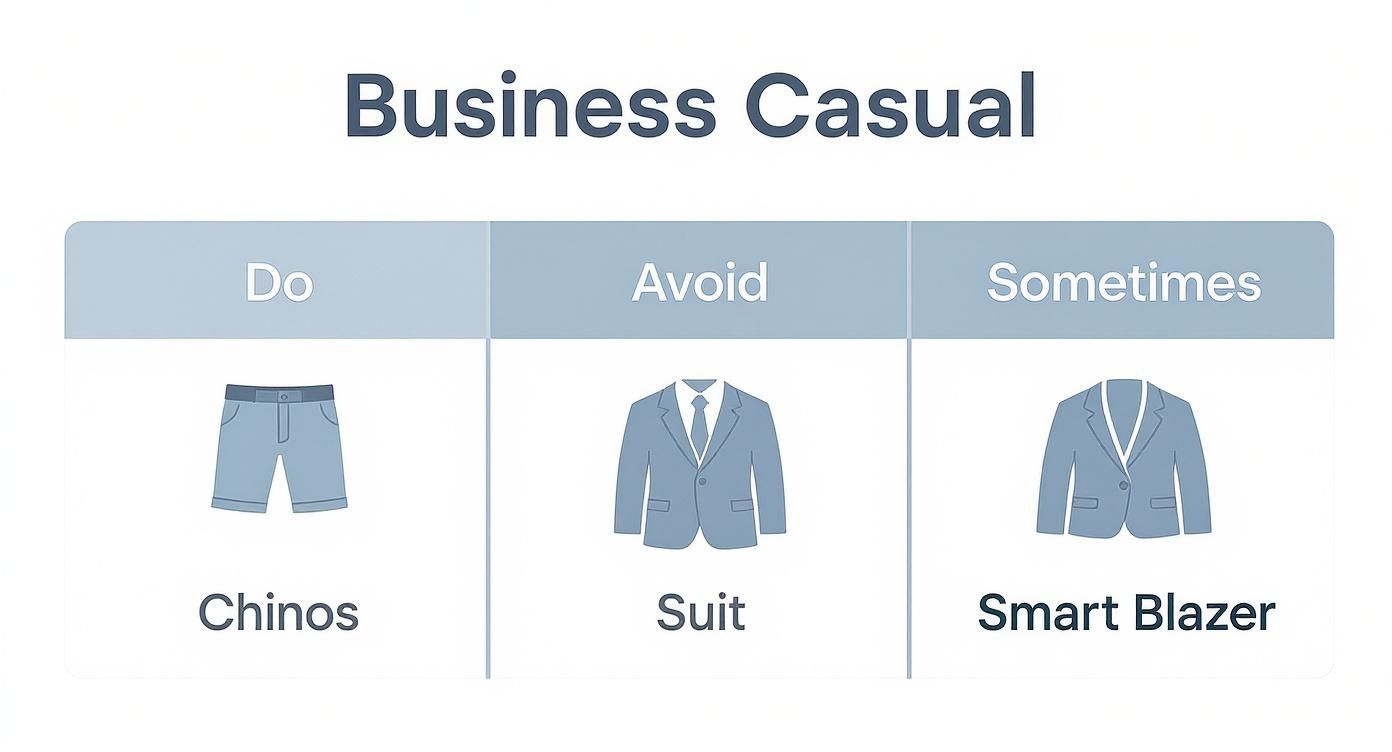
As you can see, it clearly separates the must-haves, like chinos and loafers, from the definite no-gos, like a formal three-piece suit. It’s a great visual shortcut to making smart choices instantly.
Why This Dress Code Matters
Getting a handle on business casual is about more than just following rules—it’s about communicating competence without saying a word. Your appearance is often the first impression you make, and a well-put-together outfit signals an attention to detail and respect for your workplace. It shows you get the unspoken rules of the office culture.
The goal is to look effortlessly polished, not like you're trying too hard or, even worse, not trying at all. It’s about finding that sweet spot where style and professionalism meet.
Think of it as your daily uniform for success. It takes the guesswork out of your mornings and gives you a reliable way to look sharp.
Business Casual At a Glance
To clear things up even more, it helps to see business casual next to its relatives: the stricter business professional and the more relaxed smart casual. They all have their place, but knowing the key differences is crucial for nailing the right look for the right environment.
Attire Component | Business Casual (Do) | Business Professional (Avoid) | Smart Casual (Sometimes) |
|---|---|---|---|
Tops | Button-downs, polos, sweaters | Full suit jacket required | T-shirts (premium), henleys |
Bottoms | Chinos, dress trousers, khakis | Matching suit trousers required | Dark wash denim, cords |
Outerwear | Blazers, sport coats, cardigans | Matching suit jacket only | Bomber jackets, denim jackets |
Footwear | Loafers, Oxfords, dress boots | Formal dress shoes (e.g., black cap-toes) | Clean, minimalist sneakers |
This table shows that while business casual is relaxed, it still leans more towards professional than casual. It's distinct from its close cousin, smart casual, which often allows for more trend-focused pieces like clean, dark-wash jeans. For a deeper dive into that, check out our guide on what is the smart casual dress code to really understand the subtle but important differences. Building a solid business casual foundation is the first step to conquering any professional dress code with confidence.
Building Your Core Business Casual Wardrobe
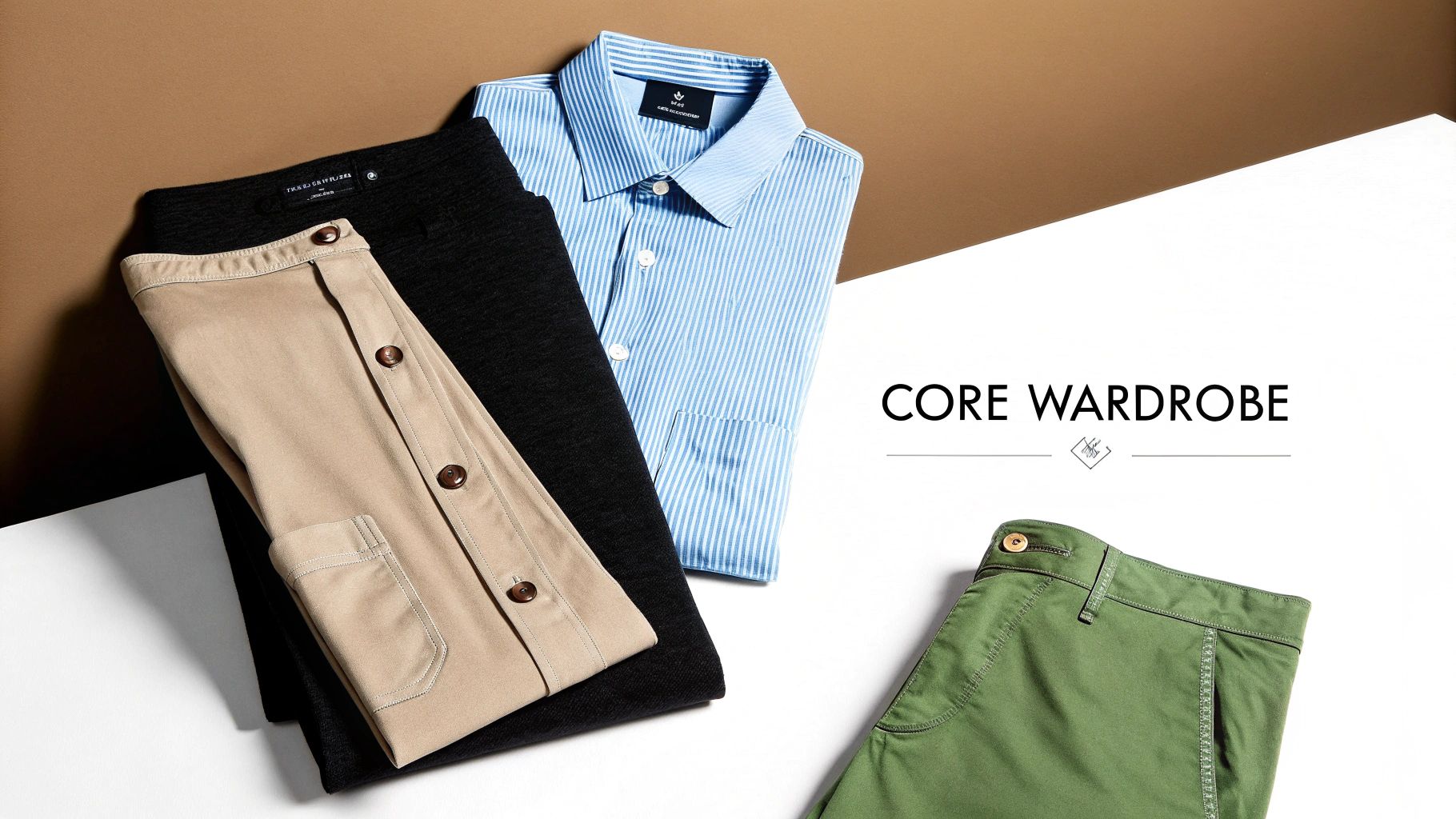
Putting together a solid business casual wardrobe isn't about stuffing your closet with endless options. It's about having the right options. Think of it like a smart investment—a curated set of high-quality, versatile pieces that take the guesswork out of your mornings and keep you looking sharp.
The magic is in the mix-and-match. Every shirt should work with every pair of pants, and every sweater should layer over any of those combinations. That’s how you get dozens of outfits from a handful of items. Maximum style, minimal effort.
Let's be honest, "business casual" has evolved. It's no longer just a suit without the tie. Today’s look blends formal and informal pieces, giving you more room for personality with different colors and fabrics while still looking professional. To get a better sense of how things have changed, it's worth checking out the modern standards for business casual attire on The Forage.
The Essential Shirts
Your shirts are the backbone of your daily look, so this is one area where you don't want to cut corners. A few well-made, great-fitting shirts are an absolute must.
First up, the classic Oxford Cloth Button-Down (OCBD). It’s a timeless piece that perfectly walks the line between dressed-up and relaxed. Grab one in white and another in light blue—those two colors alone will handle most situations. The slightly textured fabric gives them a bit of character and makes them incredibly durable.
Next, you'll want a couple of dress shirts in smoother fabrics like poplin for days when you need to look a little sharper. A crisp white one is non-negotiable. From there, think about adding subtle patterns like a fine pinstripe or a micro-gingham for some visual interest that isn't too loud.
Foundational Trousers: Chinos and Beyond
Forget the baggy khakis of the past. Today's chinos are your wardrobe's workhorse. They’re slim, comfortable, and hit that sweet spot right between formal trousers and your weekend jeans.
To start, you really only need three core colors to get maximum mileage:
Navy: A sharp alternative to black that pairs with almost anything.
Khaki/Tan: The quintessential business casual color for a classic, approachable vibe.
Grey: A modern neutral, anything from charcoal to a lighter grey, that keeps things looking clean.
Once you have those basics covered, you can branch out into colors like olive green or even burgundy. The most important thing, no matter the color, is getting the fit right—slim but not skinny.
Pro Tip: Pay attention to the "break" of your trousers—the little fold of fabric that hits the top of your shoes. For a modern and clean look, you want a slight break or even no break at all. It keeps your whole silhouette looking sharp.
The Power of Layering: Sweaters and Blazers
This is how you take a simple outfit and make it look intentional. Layers add depth, texture, and a touch of personality, making them crucial for anyone trying to master business casual.
A merino wool sweater is an absolute must-have. This stuff is lightweight and breathable, so you can easily throw it on over a button-down without feeling bulky. Start with a crewneck or V-neck in a go-to color like charcoal, navy, or heather grey.
The unstructured blazer or sport coat is your secret weapon. It’s not as stiff or formal as a suit jacket, but it instantly makes a simple shirt and chinos look ten times more put-together. A navy blazer is the undisputed champ here; it works for a regular day at the office, a client lunch, and almost anything in between. Look for one in a comfortable cotton or wool blend. It's the one piece that will make your entire wardrobe feel more polished.
Why a Great Fit Is Your Secret Weapon
Let's get one thing straight, something that completely changes the game when it comes to style: the fit of your clothes matters infinitely more than the brand name or how much you paid. It's a simple truth. A perfectly tailored $50 shirt will always, always look better than a $300 designer one that’s baggy and hanging off you. This isn't just a minor detail—it's the very foundation of looking sharp.
Think about it. Before you even say a word, your clothes are already talking. A great fit communicates competence and an eye for detail. When your clothes follow the lines of your body, it creates a clean, intentional silhouette. On the flip side, poorly fitting clothes can make you look sloppy, no matter how much you spent.
Nailing the Fit on Key Garments
Understanding what a "good fit" actually looks like is the first real step. Forget vague advice; let's get specific on the workhorses of your business casual wardrobe.
The Button-Down ShirtThis is where so many guys get it wrong. A well-fitting shirt is your best friend.
Shoulders: The seam where the sleeve connects to the shirt's body should sit right at the edge of your shoulder bone. If it's drooping down your arm, the shirt is too big. If it's creeping up toward your neck, it's definitely too small.
Torso: You should be able to pinch about 1-2 inches of fabric on either side of your stomach. Any more than that, and it'll look like a tent when tucked in. Any less, and the buttons will strain, creating that dreaded "X" shape across your chest.
Sleeves: Stand with your arms relaxed at your sides. The cuff should end right where your palm meets your wrist. This is the sweet spot that lets about half an inch of your shirt cuff peek out when you're wearing a blazer.
Chinos and TrousersThe right trouser fit can instantly make you look taller and leaner. It's all in the details.
Waist: They should sit comfortably on your waist without needing a belt to hold them up. If the belt is doing all the work, they're too big. Simple as that.
Seat: The fabric should drape smoothly over your backside. You don't want it pulling tight, but you also don't want it looking saggy. There should be just enough room to move and sit down without a struggle.
Break: This is just the fancy term for the fold of fabric at the bottom of your trousers where they hit your shoes. For a clean, modern business casual look, you want a slight break or no break at all. This creates a much sharper line than having a bunch of fabric pooling around your ankles.
Demystifying the Tailor
A lot of guys think tailoring is some expensive, complicated ritual just for suits. That's a huge misconception. In reality, simple alterations are pretty affordable and can make an off-the-rack piece look like it was made just for you.
Your tailor is the most important person in your style journey. Finding a good one is like finding a great mechanic—they keep your investment running perfectly. Think of tailoring not as an extra cost, but as the final step in purchasing an item.
Here are a few common alterations that make a world of difference:
Hemming Trousers: Getting the length just right is probably the easiest and most impactful fix you can make.
Taking in a Shirt's Waist: This is how you get rid of that "muffin top" of extra fabric billowing around your waist when you tuck your shirt in.
Slimming Sleeves: Removing extra fabric from the sleeves of a shirt or blazer keeps them from looking sloppy and baggy.
Investing a few bucks in these small tweaks is the smartest money you can spend on your wardrobe. For more specific advice, our article on finding suitable shirts that are tailored to every man’s unique body shape can help you find the perfect starting point before you even head to the tailor. It’s how you transform good pieces into great ones.
Mastering Layers and Outfit Formulas
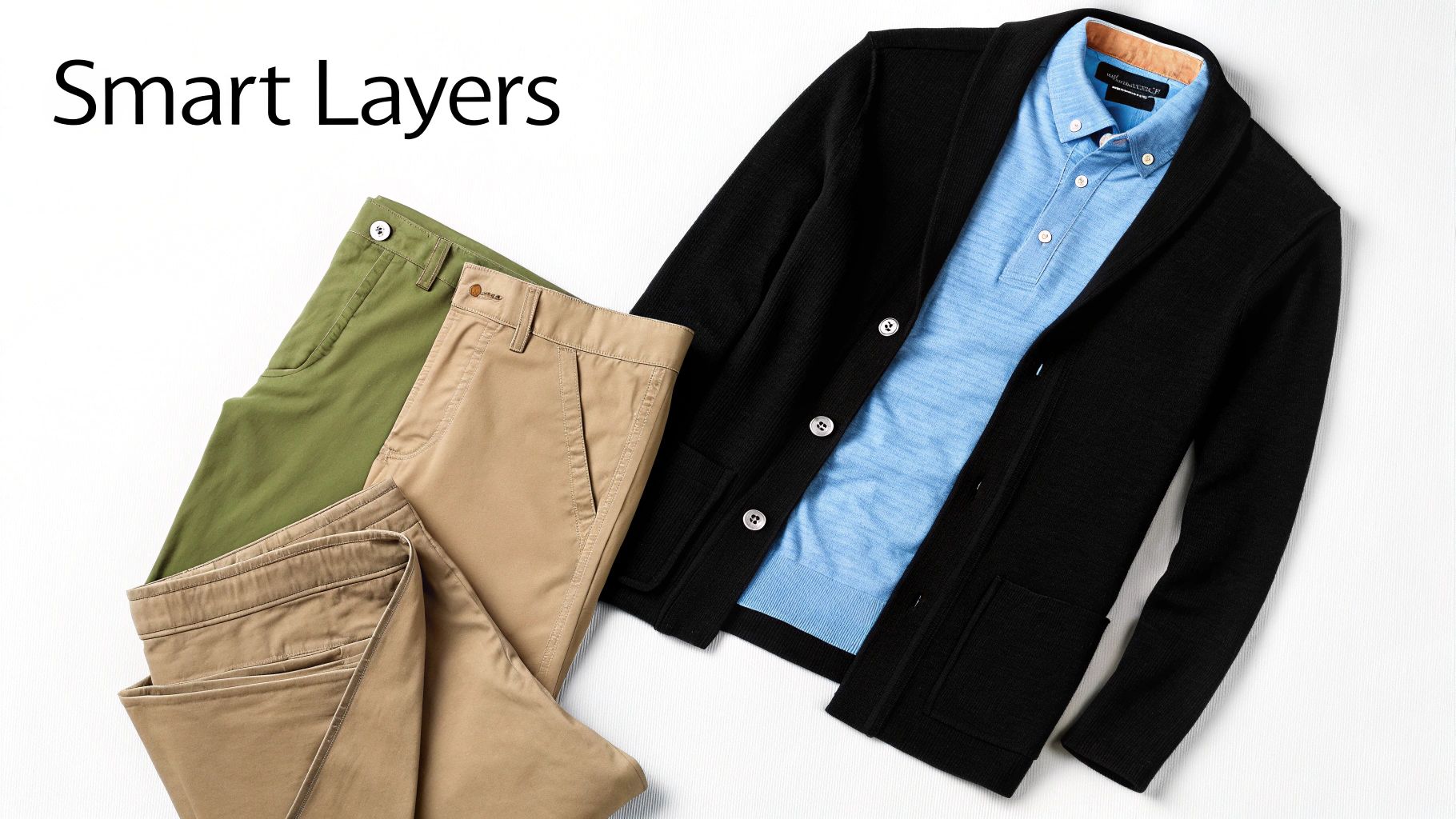
Once you've got your core pieces, the real fun begins. Knowing how to combine them into polished, intentional outfits is what separates the guys who just wear clothes from the men who truly have style. Think of it less like a chore and more like using a set of proven formulas to build a great look, every single time.
This is where the magic of layering really comes into play. Adding a third piece—like a sweater, a cardigan, or an unstructured blazer—is the single fastest way to elevate an outfit from good to great. It transforms a simple shirt and pants combo into a thoughtful ensemble, adding depth, texture, and visual interest that makes you look instantly more put-together.
Go-To Business Casual Outfit Formulas
To take the guesswork out of your mornings, you just need a few foolproof formulas in your back pocket. These combinations are designed to work with the core wardrobe staples we've already talked about, so you'll always have a sharp, reliable option ready to go.
The Classic Professional: Start with a light blue Oxford button-down, neatly tucked into a pair of navy chinos. Toss a charcoal merino wool crewneck sweater over the top, and finish it off with some brown leather derby shoes. This is a timeless look that projects quiet confidence and works in pretty much any office.
The Modern Creative: Grab those slim-fit grey trousers and pair them with a crisp white button-down. But instead of a sweater, throw on a well-fitted, unstructured navy blazer. Complete the look with minimalist white leather sneakers for a contemporary edge that feels smart but still approachable.
The Relaxed Friday: For a more casual day, start with dark-wash jeans (if your office is cool with it) or olive chinos. Wear a high-quality, plain white polo shirt and layer a sophisticated grey cardigan over it. This formula perfectly balances comfort with a clean, professional vibe.
Now, these aren't strict rules—think of them as starting points. You can easily swap colors, like using khaki chinos instead of navy, or change a crewneck sweater to a V-neck. The structure of the outfit stays the same, which is exactly why it works so well.
The Power of the Third Piece
The "third piece rule" is a simple concept that makes a huge impact. Your shirt and pants are your first and second pieces; they're the necessities. The third piece is what adds personality and polish. This could be a blazer, a sweater, a vest, or even a stylish chore coat.
Think of your third piece as the glue that holds your whole look together. It shows you put thought into your outfit beyond the absolute basics and signals a much higher level of attention to detail.
This is especially important right now, as the definition of business casual evolves. The old, sometimes sloppy office styles are being replaced by a sharper, more deliberate aesthetic. As The Gentleman's Journal notes, this new approach is all about high-quality essentials that convey purpose and structure. The modern professional prefers premium materials and an understated style that communicates effortless competence. You can read more about how business casual for men is evolving on The Gentleman's Journal. Adding a structured third piece fits perfectly with this shift.
Mixing Patterns and Colors with Confidence
Layering also opens up the door to introducing subtle patterns and more color into your wardrobe without looking like you got dressed in the dark. The key is just to follow a few simple guidelines to make sure everything works together.
Anchor with Neutrals: Always start with a neutral base, like navy, grey, or khaki trousers. This gives you a solid foundation that can handle a patterned shirt or a colored sweater without creating chaos.
Vary the Scale: If you're mixing two patterns (say, a striped shirt and a textured blazer), make sure they're different sizes. A shirt with fine pinstripes works great under a blazer with a wider, more noticeable herringbone texture. Two small, busy patterns right next to each other will just fight for attention.
Stick to a Cohesive Color Palette: Make sure the colors in your layers and patterns complement each other. If your checkered shirt has a hint of blue in it, a navy sweater will pull the whole look together seamlessly. Your belt and shoes should also be in agreement—brown with brown, black with black.
By mastering these simple layering techniques and relying on a few solid outfit formulas, you eliminate the daily stress of figuring out what to wear. You'll be able to confidently build dozens of sharp, professional looks from just a handful of versatile pieces, ensuring you always make the right impression.
Choosing the Right Shoes and Accessories
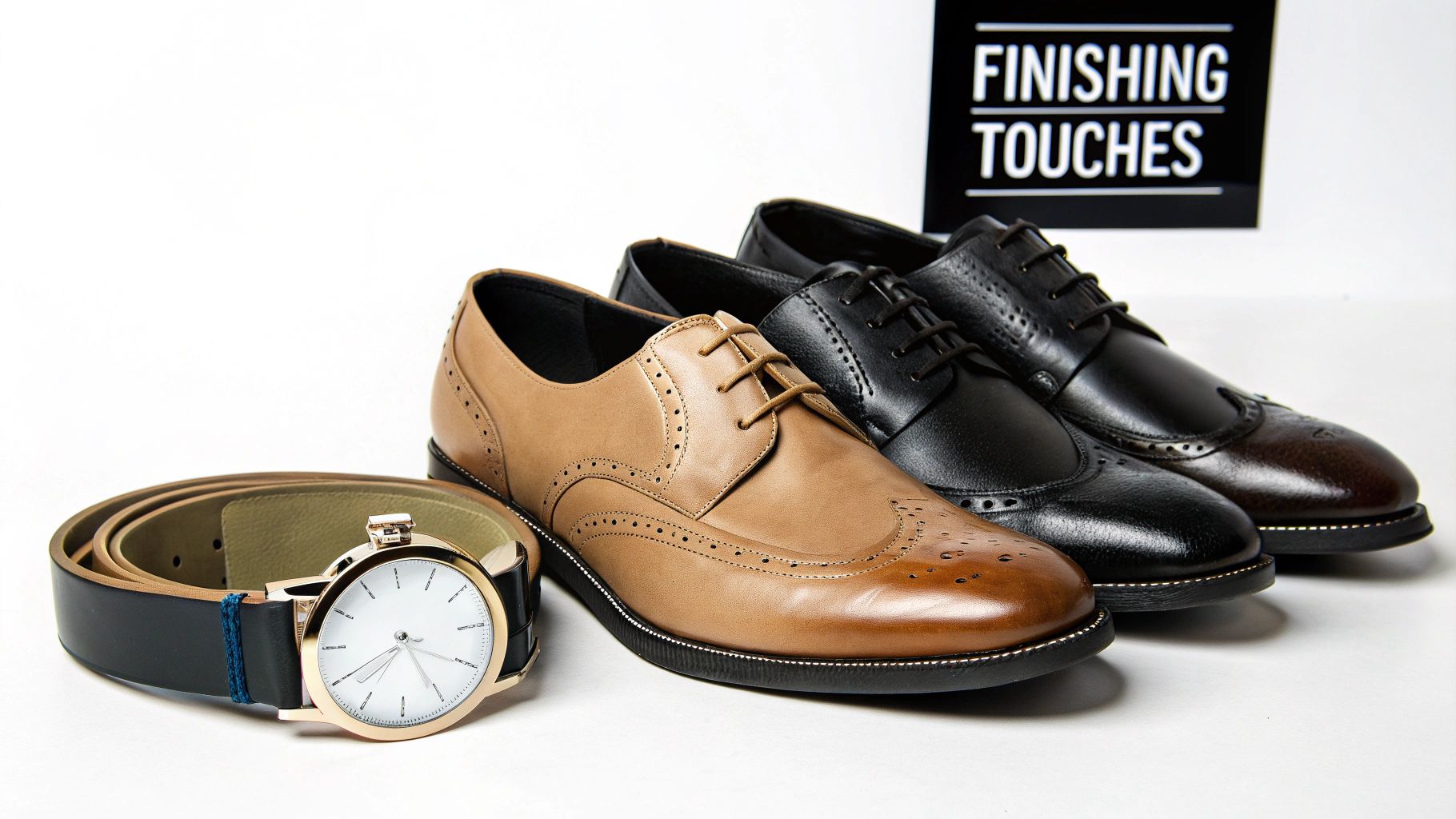
Your shoes and accessories are the finishing touches that pull an entire outfit together. Getting these details right is what separates the guys who know how to dress from those who just put on clothes. Think of them as powerful signals that you understand style is a head-to-toe commitment.
So many men put all their effort into a great shirt and trousers, only to drop the ball with scuffed, clunky, or just plain wrong shoes. Don't be that guy. Your shoes are the anchor for your whole look, so they deserve just as much thought as anything else you wear.
Foundational Footwear for Business Casual
Building a solid shoe collection for the office doesn't mean you need dozens of pairs. With just a few key styles, you can handle almost any business casual situation with confidence. These are the workhorses every man should own.
First up is the leather loafer. You could argue this is the most versatile shoe in the business casual playbook. Whether you go for a classic penny loafer or a more detailed tassel loafer, this slip-on style perfectly blends comfort and class, pairing easily with everything from chinos to dress trousers.
Next, you absolutely need a good pair of derby shoes. They're a bit more relaxed than their formal Oxford cousins (which have a "closed" lacing system), making them an ideal match for the business casual dress code. A pair in brown or oxblood leather will quickly become your go-to for big meetings or any day you need to look extra sharp.
Finally, the minimalist leather sneaker has earned its spot in most modern offices. I'm not talking about your gym shoes. We're talking clean, simple, low-profile sneakers in white, black, or brown leather. They bring a contemporary edge that looks fantastic with slim chinos and a blazer.
A well-chosen pair of shoes does more than just complete an outfit—it defines it. Clean, quality footwear signals professionalism and attention to detail before you even say a word.
For a deeper dive into the essential footwear every man should have in his rotation, our guide on the various shoes every man needs to have is an excellent place to start building your collection the smart way.
The Simple Rules of Accessorizing
When it comes to accessories, the golden rule has always been "less is more." Your goal is to add a touch of polish and personality, not create a distraction. A few high-quality, timeless pieces will enhance your look without overwhelming it.
The Belt Is Not OptionalThe most important accessory rule for men is also the simplest: your belt leather should match your shoe leather. Brown shoes get a brown belt. Black shoes get a black belt. It’s a small detail that creates a polished, intentional look. Invest in a quality leather belt with a simple, classic buckle—it's worth it.
A Timeless WatchEven in the age of smartphones, a classic watch is less about telling time and more about making a statement. A simple, elegant watch—whether it's a leather-strapped dress watch or a stainless steel diver—adds a dose of maturity and sophistication to any outfit. It's a subtle nod to classic style that never goes unnoticed.
Here’s a quick cheat sheet for pairing everything up:
Footwear Color | Belt Color | Watch Strap |
|---|---|---|
Brown Leather | Brown Leather | Brown Leather or Stainless Steel |
Black Leather | Black Leather | Black Leather or Stainless Steel |
Oxblood/Burgundy | Oxblood/Burgundy | Brown Leather or Stainless Steel |
By mastering these fundamental choices, you ensure every outfit you put together is polished from the ground up. These are the details that show you truly get how to dress, projecting an image of competence and care.
Common Business Casual Mistakes to Avoid
Sometimes, knowing what not to do is more powerful than knowing what to wear. Let's be honest, the world of business casual can be a minefield, but dodging a few common mistakes will instantly sharpen your look. It's how you show you've got a handle on the details.
A lot of these slip-ups are small, almost unnoticeable on their own. But add them up, and they can completely torpedo an otherwise great outfit. By getting these right, you make sure your first impression is always a strong one.
Obvious but Critical Errors
Let's start with the absolute basics, the non-negotiables. Wrinkled shirts are a massive red flag; they just scream "I rolled out of bed and didn't care." Always, always iron or steam your shirts. Right alongside that are scuffed, dirty, or just plain beat-up shoes. A quick polish or even a wipe-down takes sixty seconds and makes all the difference.
Another huge one is simply wearing clothes that don't fit. We've talked about it before, but it bears repeating: baggy pants or a shirt that billows out like a parachute can make even the most expensive clothes look cheap.
Wrinkled Clothing: Suggests you're rushed and don't value presentation.
Scuffed or Worn Shoes: Instantly brings down your entire appearance.
Poor Fit: Baggy or tight clothes completely ruin your silhouette.
Subtle Style Missteps
Okay, beyond the glaringly obvious, there are finer points that separate the novices from the pros. A classic mistake is grabbing a suit jacket and trying to pass it off as a blazer. They are not the same thing, believe me. Suit jackets are built with more structure and are specifically cut to be worn with their matching trousers. Wearing one with chinos or jeans just looks off and mismatched.
Then there's the whole issue of the "trouser break"—that's the spot where your pants meet your shoes. Too much fabric pooling around your ankles creates a sloppy, dated vibe. You're much better off aiming for a slight break or even no break at all. It creates a clean, modern line that keeps you looking sharp.
A suit jacket worn as a blazer is a tell-tale sign of a style novice. Invest in a dedicated, unstructured sport coat or blazer; its softer shoulders and more versatile fabric are designed to be paired with different types of trousers.
Finally, you have to know where to draw the line. Some things are just too casual, no matter how relaxed your office is. This includes:
Graphic t-shirts, even if you hide them under a blazer.
Distressed, ripped, or heavily faded jeans.
Your gym sneakers instead of clean, minimalist leather ones.
Loud, distracting patterns or bright colors that clash and demand too much attention.
Steer clear of these common blunders, and your business casual game will always hit the right mark: professional, polished, and effortlessly stylish.
Answering Your Business Casual Questions
Once you get the basics down, you'll still run into those tricky "what if" situations. The gray areas of business casual can be tough to navigate, so let's clear up some of the most common questions you'll probably face.
Can I Wear Jeans for Business Casual?
This really, truly depends on your specific office. If you see your colleagues wearing them, then you can probably give it a try. But stick to a pair of dark-wash, slim-fit jeans with absolutely no rips, tears, or heavy fading. Always dress them up with a blazer and some leather shoes to keep the whole look professional.
When in doubt, it's always better to be a little overdressed. My personal advice? Stick to chinos for the first few weeks on a new job. This gives you time to really get a feel for the office vibe before you even think about adding denim to your work rotation.
Should I Always Tuck My Shirt In?
For most button-down shirts—the ones with a traditional, curved hem—the answer is a definite yes. Tucking in your shirt creates that clean, polished look that's standard for professional settings.
Polo shirts are a bit more flexible. You can wear them untucked in a more relaxed office, but tucking them in is always the safer, more formal option. The only shirts actually designed to be worn untucked have a flat, straight hem, but honestly, those usually lean a bit too casual for this dress code anyway.
A tucked shirt is a small detail that makes a huge impact. It shows you're being intentional and respectful of your workplace, and it instantly makes you look more put-together.
What's the Best Kind of Jacket to Wear?
The unstructured navy or grey blazer is going to be your most valuable player here. It’s less stiff and formal than a full suit jacket, but it immediately makes any outfit look more thoughtful and complete.
Here are some other fantastic options:
Sport coats with a subtle pattern, like a faint check or herringbone.
High-quality bomber jackets in a nice material like suede or wool can add a modern twist.
A stylish chore coat is a great choice for a more contemporary or creative office.
Ready to build a wardrobe that works as hard as you do? STYLISH FITTS offers a curated collection of menswear essentials, from sharp dress shirts and chinos to versatile loafers that perfectly nail the business casual look. Explore our latest arrivals and find your perfect fit today at https://www.stylishfitts.com.
Article created using Outrank
Comments